
- November 4, 2026
- Uncategorized
Investors in Manufacturing Essential Asset, DST (“MEA DST”), a $182 million Delaware Statutory Trust sponsored by Las Vegas-based CAI Investments, LLC, are facing suspended distributions, a foreclosure lawsuit, and reported requests for additional capital. The property’s sole tenant, U.S. Medical Glove Company, has stopped operating at the facility, and the lender alleges a payment default dating back to early 2024.
When an investment like this fails, the first question is usually about the sponsor. But investors who bought through a brokerage firm should ask a second, equally important question: did the broker-dealer that recommended this private placement conduct the reasonable investigation FINRA requires? As discussed below, FINRA Regulatory Notice 10-22 makes clear that broker-dealers cannot simply rely on what a sponsor tells them.
The Offering
MEA DST owns a roughly 1.5 million-square-foot industrial campus at 2001 N. Division Street in Harvard, Illinois, the former Motorola headquarters. According to CAI’s offering page, the property is 100% leased to a single tenant, U.S. Medical Glove Company, under a 23.5-year absolute triple-net lease with 2% annual rent increases, and projected cash-on-cash returns of 6.62% or more over a 10-year hold. The minimum investment was $100,000, and the offering was marketed to 1031 exchange investors.
Key facts from public filings and announcements:
- Offering size: $182 million in investor equity; CAI described the total transaction as $286 million including debt (CAI, March 19, 2026).
- Exemption: The offering began under Rule 506(b) in April 2023 and converted to Rule 506(c) in January 2024 (AltsWire).
- Capital raised by January 2024: $52.1 million from 156 investors, per the January 24, 2024 Form D amendment (Form D summary).
- Estimated sales commissions: $20.4 million, per the Form D. Emerson Equity LLC (CRD# 130032) is listed as the sales compensation recipient.
- Fully subscribed: CAI announced on March 19, 2026 that the offering was fully subscribed.
Like most DSTs, MEA DST was sold as a Regulation D private placement. It was illiquid, dependent on a single tenant, and carried roughly 11% in estimated commissions on the equity raised. These features are exactly why FINRA expects broker-dealers to investigate such offerings carefully before recommending them.
What Went Wrong
On August 20, 2026, the lender, Barbarich Capital LLC, filed a foreclosure action in McHenry County, Illinois, naming U.S. Medical Glove Company, MEA DST, and CAI founder Christopher Beavor, among others. According to reporting by the Northwest Herald, the complaint alleges:
- A payment default beginning in early 2024, with payments missed from January 2024 through March 2026 and more than $21 million in unpaid interest accrued.
- Principal and interest exceeding $126 million as of August 5, 2026, accruing more than $26,700 per day.
- The lender could not authenticate insurance certificates it received in March 2026, and Mr. Beavor “ultimately admitted that there was no insurance.”
- An unpaid $206,780 property tax bill due June 9, 2026, and “dozens of broken windows” observed in late June.
The same report states that the City of Harvard deemed the campus unsafe for occupancy in April 2026 after the fire alarm, fire pump, and fire-detection systems were cited, and that operations at the facility have ceased. It also reports that at least 13 lawsuits have been filed in McHenry County against the tenant or related entities since 2023, including a nearly $2.5 million default judgment in favor of ComEd for unpaid electric bills.
Investors have reportedly seen distributions suspended and have been asked to contribute additional capital to stave off foreclosure. These are allegations; none has been adjudicated.
What FINRA Regulatory Notice 10-22 Requires
In April 2010, FINRA issued Regulatory Notice 10-22 to remind broker-dealers of their obligation to conduct a reasonable investigation of Regulation D offerings before recommending them to customers. The Notice explains that a broker-dealer recommending a security “is under a duty to conduct a reasonable investigation concerning that security.” That duty “emanates from the BD’s ‘special relationship’ to the customer.”
The Notice sets out several core principles:
- No blind reliance on the sponsor. A broker-dealer “may not rely blindly upon the issuer for information concerning a company.”
- Red flags must be investigated. A firm must “follow up on any red flags that it encounters during its inquiry” and “investigate any substantial adverse information about the issuer.”
- Verify the assets. Recommended practices include “[v]isiting and inspecting a sample of the issuer’s assets and facilities” and scrutinizing management, business prospects, and related-party conflicts.
- Reliance on a managing broker-dealer has limits. A selling firm may rely on a syndicate manager’s investigation only if it has reason to believe the manager has “the expertise and absence of conflicts” to do it properly, and the selling firm “retains its own responsibilities.”
- Supervise and document. Firms must maintain supervisory procedures for private placements and document their investigation.
FINRA reiterated these obligations in Regulatory Notice 23-08, and they now operate alongside the Care Obligation of Regulation Best Interest. A firm that cannot show a reasonable investigation lacks a reasonable basis to recommend the offering to anyone, regardless of the customer’s accredited status.
Red Flags a Reasonable Investigation Should Have Examined
If the lender’s allegations are accurate, much of the capital in MEA DST was raised after the property’s financing was already in default. The timeline below compares what was being sold with what was allegedly happening at the property.
| Date | Offering activity | Alleged condition of the property and tenant |
|---|---|---|
| 2023 | Offering launches under Rule 506(b) in April 2023 | Lawsuits against the tenant and related entities begin accumulating in McHenry County |
| January 2024 | Offering converts to Rule 506(c); about $52 million of $182 million raised | Lender alleges missed payments begin |
| March 2026 | CAI announces the offering is fully subscribed | Lender cannot authenticate insurance; the property is allegedly uninsured |
| April 2026 | City deems campus unsafe for occupancy; fire systems cited | |
| August 2026 | Lender files foreclosure, claiming more than $126 million |
On these facts, roughly $130 million of investor equity appears to have been raised after the alleged default began. That raises the central due diligence questions:
- Did the selling firms review the tenant’s financials? U.S. Medical Glove Company is privately held. A single-tenant DST is only as strong as its tenant, and Notice 10-22 calls for scrutiny of the issuer’s business prospects and financial condition.
- Did anyone search the public court record? A tenant facing more than a dozen lawsuits and an unpaid-utility judgment is the kind of “substantial adverse information” the Notice says must be investigated.
- Did the firms obtain ongoing updates while the offering remained open? Due diligence is not a one-time event for a continuous offering that stays open for nearly three years.
- Did anyone inspect the property or verify insurance? Notice 10-22 specifically recommends visiting the issuer’s assets and facilities.
- Did the firms evaluate conflicts? Any business relationships among the sponsor, the tenant, and the lender would present a recognized conflict of interest risk that Notice 10-22 directs firms to examine.
If a broker-dealer relied solely on the sponsor’s marketing materials and the managing broker-dealer’s report, without independently testing those representations, it did not meet the standard FINRA describes.
The Selling Broker-Dealer
The Form D for MEA DST lists Emerson Equity LLC (CRD# 130032) of San Mateo, California as the recipient of sales compensation. Emerson Equity has been registered with FINRA since 2004. Many other brokerage firms are also part of the selling group.
What MEA DST Investors Can Do
Investors who purchased MEA DST through a brokerage firm may have claims against that firm for failing to conduct a reasonable investigation, making unsuitable recommendations, overconcentrating their assets in a single illiquid private placement, misrepresenting risks, or failing to supervise the sale. These claims are typically resolved through FINRA arbitration, not in court.
Investors facing a capital call should be cautious before contributing more money without a full accounting of how the funds will be used. Gather and preserve your subscription documents, private placement memorandum, account statements, marketing materials, and all sponsor and advisor communications.
Wolper Law Firm represents investors nationwide in FINRA arbitrations involving Delaware Statutory Trusts, alternative investments, and Regulation D private placements. If you invested in Manufacturing Essential Asset, DST, contact us for a free consultation.
Attorney Matthew Wolper
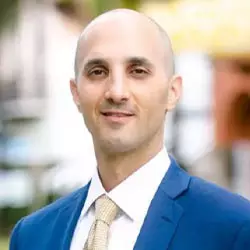 Matt Wolper is a trial lawyer who focuses exclusively on securities litigation and arbitration. Mr. Wolper has handled hundreds of securities matters nationwide before the Financial Industry Regulatory Authority (FINRA), American Arbitration Association (“AAA”), JAMS, and in state and federal court. Mr. Wolper has handled and tried cases involving complex financial products and strategies ranging from traditional stocks and bonds to options, margin and other securities-based lending products, closed/open-end mutual funds, structured products, hedge funds, and penny stocks. [Attorney Bio]