
- September 14, 2025
- Uncategorized
The Wolper Law Firm and Doss Law Firm, LLC are investigating the alleged fraudulent “pump and dump” scheme involving Ostin Technology Group Co., Ltd., which trades under the stock ticker OST (hereinafter, the “OST Pump and Dump Scheme”). Ostin Technology Group is a company engaged in the manufacturing of display modules used in consumer electronics, commercial LCD displays and automotive displays.
On September 10, 2025, the Department of Justice filed criminal charges against Yan Zhao (aka Hank Shi, Hank Shu, Altman and Bob) and Lai Kui Sen, the CEO of Ostin Technology Group. A link to the Department of Justice press release can be accessed by clicking here (https://www.justice.gov/opa/pr/co-ceo-chinese-publicly-traded-technology-company-and-financial-advisor-indicted-over-100m).
According to the criminal indictment, between December 2024 and August 2025, Yan Zhao (aka Hank Shi, Hank Shu, Altman and Bob) and Lai Kui Sen, with the assistance of at least 15 co-conspirators, two Financial Industry Regulatory Authority (“FINRA”) registered brokerage firms and four FINRA registered Financial Advisers, engaged in a pump and dump scheme involving OST stock. The OST Pump and Dump Scheme resulted in investor losses of more than $110 million.
Allegations Involving the OST Pump and Dump Scheme
A pump and dump scheme occurs when bad actors spread false or misleading information about a publicly trade stock in order to create a buying frenzy that will artificially inflate the price of the underlying stock. After the stock price is artificially inflated, the bad actors sell their personal shares of the same stock at high prices, creating profits. At the same time, the sales drive down the price of the underlying stock, causing investor losses for the remaining shareholders.
The OST Pump and Dump Scheme was carefully planned and involved several steps.
- First—Yan Zhao and Lai Kui Sen provided their co-conspirators with 70 million shares of OST stock through bogus securities transactions in which the co-conspirators paid little or nothing for the shares.
- Second—Yan Zhao and Lai Kui Sen created WhatsApp chat groups to generate interest in OST stock primarily from Chinese American retail investors. Within these chat groups, Yan Zhao and Lai Kui Sen propagated false and misleading information, suggesting that OST Stock was an ideal stock for purchase. All negative information was immediately removed from the chat groups.
- Third—Yan Zhao and Lai Kui Sen engaged FINRA member Financial Advisors to obtain new retail securities clients, solicit new clients and participate in the WhatsApp chat groups. Together, retail securities clients were recommended to purchase large quantities of OST stock. The aggregate of these purchases artificially inflated the price of OST stock from $0.80 to $9.40 within a three month time period in 2025. All of these sales took place in FINRA member brokerage accounts facilitated by FINRA member Financial Advisors, who were co-conspirators. This stage represented the “Pump.”
- Fourth—Yan Zhao and Lai Kui Sen sold all of the OST stock previously transferred to their co-conspirators in bogus securities transactions at the peak, artificially driving down the price of OST stock held by the retail securities investors. Within short order, OST stock lost 94% of its market value, resulting in investor losses of more than $950 million. This stage represented the “Dump.” At the same time, Yan Zhao and Lai Kui Sen are alleged to have made $110 million.
The criminal indictments against Yan Zhao and Lai Kui Sen remain pending and will most certainly resulting in further investigation of the co-conspirators, brokerage firms and Financial Advisors.
The Securities Laws Protect Investors from Pump and Dump Schemes
The manner in which the OST Pump and Dump Scheme was orchestrated raises serious concerns about the brokerage firms and Financial Advisors involved in this fraud. Without their involvement, Yan Zhao and Lai Kui Sen could never have completed their objective. The Wolper Law Firm and Doss Law Firm are investigating potential claims against these brokerage firms and Financial Advisors for their role in facilitating the fraudulent conduct.
FINRA Rule 2010 provides that all brokerage firms and their employees “shall observe high standards of commercial honor and just and equitable principles of trade.” This means that FINRA member brokerage firms must treat their customers fairly and protect them from misconduct.
FINRA Rule 2090 provides that “every member shall use reasonable diligence, in regard to the opening and maintenance of every account, know (and retain) the essential facts concerning every customer and concerning the authority of each person acting on behalf of such customer” This means that FINRA member brokerage firms have a duty to understand the reason why their customers have decided to open accounts and facilitate specific securities transactions within those accounts. This obligation ensures that the brokerage firm is only facilitated lawful securities transactions that are consistent with the needs and objectives of the customers.
Unfortunately, pump and dump schemes are not new. In 2022, FINRA issued Notice to Members 22-25, acknowledging an increase in the type of activity that occurred with the OST Pump and Dump Scheme.
FINRA alerts members to an emerging threat to customers and members, where FINRA, NASDAQ and NYSE have observed initial public offerings (IPOs) for certain small capitalization (small-cap) issuers listed on U.S. stock exchanges that may be the subject of pump-and-dump-like schemes (sometimes referred to as “ramp-and-dump” schemes in other jurisdictions). FINRA has observed significant unusual price increases on the day of or shortly after the IPOs of certain small-cap issuers, most of which involve issuers with operations in other countries. FINRA has concerns regarding potential nominee accounts that invest in the small-cap IPOs and subsequently engage in apparent manipulative limit order and trading activity. Some of the investors harmed by ramp-and-dump schemes appear to be victims of social media scams.
FINRA warns brokerage firms of their obligation to “pay close attention to suspicious trends in the marketplace” and “adapt their supervisory systems as well as compliance and risk management programs to ensure that they are monitoring for and addressing this threat.” FINRA Rules further require that brokerage firms have supervisory systems in place to detect and prevent violations of securities laws. The failure to implement adequate supervisory systems will subject the brokerage firms to liability for investor losses.
If I am an Investor in OST, What Avenues of Recovery do I have?
The Wolper Law Firm and Doss Law Firm represent investors nationwide in securities litigation and arbitration. Matt Wolper, the Managing Principal of the Wolper Law Firm, has handled more than 1,000 securities cases during his career involving a wide range of products, strategies and securities. Jason Doss is the managing member of The Doss Firm, LLC based out of Atlanta, Georgia and has represented investors in disputes for over twenty years and has recovered over $100 million on behalf of aggrieved investors and consumers.
If you have lost money in the alleged OST Pump and Dump Scheme, contact Matt Wolper for a free, confidential consultation, to determine your options for recovery. We can be reached at (800) 931-8452 or by email at mwolper@wolperlawfirm.com.
Attorney Matthew Wolper
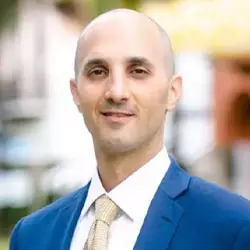 Matt Wolper is a trial lawyer who focuses exclusively on securities litigation and arbitration. Mr. Wolper has handled hundreds of securities matters nationwide before the Financial Industry Regulatory Authority (FINRA), American Arbitration Association (“AAA”), JAMS, and in state and federal court. Mr. Wolper has handled and tried cases involving complex financial products and strategies ranging from traditional stocks and bonds to options, margin and other securities-based lending products, closed/open-end mutual funds, structured products, hedge funds, and penny stocks. [Attorney Bio]